Connecticut Energy Storage Solutions in 2026: What Changed on April 1 and What a Battery Earns Now
Short answer: On April 1, 2026, Connecticut's Energy Storage Solutions program stopped paying most of its battery incentive upfront. New home enrollments now get $30 per kWh at enrollment ($130 per kWh on grid edge circuits), then $300 to $550 per kW-year for 10 years, based on how much power the battery delivers when Eversource or UI calls a dispatch event.
If you are shopping for a home battery now, this is the program you will enroll in. Many websites still show the old upfront numbers, so this guide walks through what changed, how the new payments are calculated, and what a typical battery earns, using the program manual Eversource, UI and the CT Green Bank filed with PURA. Every number below comes from the documents listed under Sources.
What is Energy Storage Solutions?
Energy Storage Solutions (ESS) is Connecticut's statewide battery incentive program for Eversource and United Illuminating (UI) customers. It pays you to install a battery and to let your utility draw on it when the grid is strained.
PURA created the program in 2021 as part of its Equitable Modern Grid work, with a goal of 580 MW of storage in Connecticut by 2030. It launched in January 2022 as a nine-year program. The CT Green Bank, Eversource and UI run it together, and it is paid for by electric ratepayers. As of the Green Bank's February 2, 2026 announcement, the program had approved nearly 15 MW of residential battery projects.
PURA reviews the program every year. The changes that took effect on April 1, 2026 came from the Program Year 5 decision in Docket 25-08-05, issued December 17, 2025. The program manual calls the new design Construct 5.
What changed on April 1, 2026?
The short version: less money upfront, more money over time, and every dollar after enrollment depends on your battery actually showing up for dispatch events.
| Enrolled before April 1, 2026 (Legacy) | Enrolling on or after April 1, 2026 (Construct 5) | |
|---|---|---|
| Upfront payment (2025 to March 2026 rates) | $162.50 to $250 per kWh standard, $450 underserved, $600 low-income, capped at $16,000 or 50% of cost | $30 per kWh, or $130 per kWh on grid edge circuits, no cap |
| Passive Dispatch | Required: weekdays in June, July and August, 5 PM to 8 PM | Gone |
| Active Dispatch pay (standard home) | $200 summer + $25 winter per kW, years 1 to 5; $115 + $15, years 6 to 10 | $300 per kW per year, all 10 years |
| Underserved or low-income pay | Same as standard | $450 or $550 per kW per year |
| Winter events | 1 to 5 | 1 to 10 |
| Leaving early | Return a prorated share of the upfront incentive | Keep the enrollment incentive |
Batteries already enrolled under the old rules keep them. Their owners stay in Passive Dispatch and keep the Active Dispatch rates they signed up for.
How much is the enrollment incentive?
The enrollment incentive is a one-time payment based on your battery's rated energy capacity in kWh:
- Residential (not grid edge): $30 per kWh
- Residential (grid edge): $130 per kWh
It shows up as a discount on your purchase or lease agreement. The Green Bank reimburses your contractor after the system is installed, energized and approved.
What is a grid edge home? A home on a circuit in the top 10% for the number of outages per customer during major storms since July 1, 2012, or in the top 10% for the longest storm outages. The program posts maps of these circuits on energystoragect.com. We look up your circuit before we quote.
How does the performance incentive work?
Your battery earns a yearly rate for every kW it delivers, on average, during dispatch events. For residential customers enrolling on or after April 1, 2026, the rate is the same for all 10 years:
| Customer class | Performance incentive |
|---|---|
| Standard residential | $300 per kW per year |
| Underserved residential (a town on the state's Distressed Municipalities list) | $450 per kW per year |
| Low-income residential (household income below 60% of state median income) | $550 per kW per year |
A few rules decide what you actually get paid:
- It is based on real output, not the label. The utility measures the average kW-AC your battery discharges across every event in the season, using inverter data.
- A missed event counts as zero. If you opt out, or your battery is offline and cannot report data, that event is scored at 0 kW and pulls your average down.
- The year is split by season. 89% of the annual rate is paid on summer performance and 11% on winter performance. For a standard home, that is $267 per kW for summer and $33 per kW for winter.
- You pick how you are paid: once a year, within two months after the summer season ends, or twice a year, within two months after each season.
- Your 10 years start on the day your battery is connected to the utility's dispatch system.
When will Eversource or UI call on my battery?
Dispatch events are called on high-demand days, when ISO New England forecasts a tight grid.
| Summer | Winter | |
|---|---|---|
| Season | June 1 to September 30 | November 1 to March 31 |
| Number of events | 30 to 60 | 1 to 10 |
| Length of each event | 1 to 3 hours | 1 to 3 hours |
| Time window | 12 PM to 9 PM, any day | 12 PM to 9 PM, any day |
| Notice | At least 24 hours | At least 24 hours |
Two rules matter a lot in Connecticut:
- Storms come first. The utilities cancel all events for the two days before any predicted Emergency Restoration Plan outage event, so your battery is full when a nor'easter or hurricane is on the way.
- No forced reserve for events. Active Dispatch does not make you hold back a set share of the battery, beyond the manufacturer's minimum. The more you let it discharge, the more you earn.
What does a battery earn under the new rules?
Here is the program manual's own worked example: a battery that can discharge 5 kW for 3 hours (about 13.5 kWh of usable energy), in a summer with 40 events. It sits out 5 events and delivers 5 kW in the other 35. Its summer average is 4.375 kW. It then delivers 5 kW in every winter event.
| Standard home | Grid edge home | Underserved | Low-income | |
|---|---|---|---|---|
| Enrollment, 13.5 kWh | 13.5 x $30 = $405 | 13.5 x $130 = $1,755 | $405 (or $1,755 if grid edge) | $405 (or $1,755 if grid edge) |
| Summer, 4.375 kW | $1,168 | $1,168 | $1,752 | $2,142 |
| Winter, 5 kW | $165 | $165 | $248 | $303 |
| Performance per year | $1,333 | $1,333 | $2,000 | $2,444 |
How the standard summer and winter lines are figured: $300 x 89% x 4.375 kW = $1,168, and $300 x 11% x 5 kW = $165. The other columns use $450 and $550 the same way.
If the same battery performed the same way for all 10 years, the standard home would earn about $13,331 in performance payments plus $405 at enrollment, or $13,736 in total. The same battery under the old rules, at the highest standard upfront rate ($250 per kWh), would have earned $3,375 upfront plus about $7,891 in Active Dispatch payments over 10 years, or $11,266.
That is arithmetic on published rates, not a promise. Real earnings depend on how many events are called, how charged your battery is when they start, and whether it stays online for every one.
Who comes out ahead, and who does not?
The new rules favor batteries that are always ready. A battery with a good internet connection, a reliable inverter and a low backup reserve earns the most. Low-income and underserved households earn the most per kW, and grid edge homes get the largest check at enrollment.
The new rules hurt if you want cash upfront. Under the old program, a standard home could get $3,375 off a 13.5 kWh battery on day one. Now that same home gets $405 and has to earn the rest over 10 years. If you are financing, ask how the payment plan lines up with seasonal checks. The program lets you assign performance payments directly to a lender or a third-party owner.
Already have a battery? Under the 2026 manual, only systems energized no more than six months before enrolling can get the enrollment incentive. Batteries installed earlier, including ones from before January 1, 2022, can still join Active Dispatch and earn performance payments at the current rates.
How do I enroll?
You enroll through an approved contractor:
- Sizing. Your contractor works out what you want to back up and for how long, and where the battery can go.
- Application. The contractor files with the program and gets a reservation that locks your enrollment amount and performance rate. Approval takes up to 30 days.
- Install and inspection. The battery is installed, inspected and energized, and the utility approves the interconnection.
- Enrollment incentive. The Green Bank pays the contractor, and you get the discount on your contract.
- Dispatch. Your battery connects to Eversource's or UI's dispatch system and your 10-year performance term begins.
Where West Electric fits
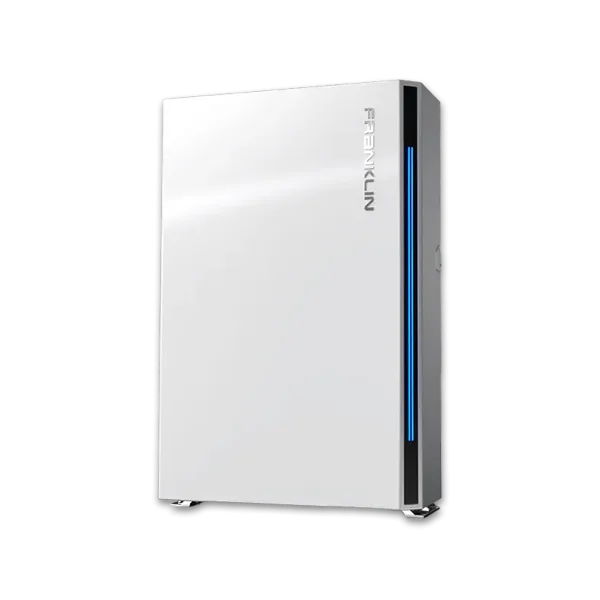
West Electric is a licensed Connecticut electrical contractor based in East Hartford. We install the Enphase IQ Battery 10C, FranklinWH, Tesla Powerwall 3 and Sigenergy, with or without solar, in towns like West Hartford, Glastonbury, Simsbury and Avon. We check your grid edge status, file the Energy Storage Solutions paperwork, and set up the battery so it earns during events and keeps a reserve for outages.
For the full picture of what solar and a battery can stack together, read our 2026 incentive stack guide. For how your solar gets paid, see our RRES guide. Ready for your own numbers? Learn more about home batteries or book a no-cost estimate.
Frequently asked questions
What changed in Connecticut's Energy Storage Solutions program on April 1, 2026?
For anyone enrolling on or after April 1, 2026, the large upfront incentive and the preset Passive Dispatch summer schedule ended. New residential customers get a smaller enrollment incentive of $30 per kWh, or $130 per kWh on grid edge circuits, plus higher performance payments for 10 years based on how much power the battery delivers during Active Dispatch events called by Eversource or UI.
How much is the Energy Storage Solutions performance incentive for homes?
For residential customers enrolling on or after April 1, 2026, the performance incentive is $300 per kW per year for standard customers, $450 for underserved customers in distressed municipalities, and $550 for low-income customers, paid for up to 10 years. It is based on the average kW your battery delivers across all dispatch events in each season, not on the battery's nameplate rating.
How many dispatch events will my battery be called for?
Under the 2026 program manual, the summer season runs June 1 to September 30 with 30 to 60 events, and the winter season runs November 1 to March 31 with 1 to 10 events. Each event lasts 1 to 3 hours between 12 PM and 9 PM, on any day of the week, with at least 24 hours of notice.
Can I opt out of a dispatch event or leave the program?
Yes. You can skip an event, but that event counts as 0 kW in your seasonal average, which lowers your performance payment. You can also unenroll from Active Dispatch, and customers who enrolled on or after April 1, 2026 do not have to return any of their enrollment incentive. If you leave mid-season, you give up that season's performance payment.
Will dispatch events drain my battery before a storm?
No. The program manual says Eversource and UI cancel dispatch events for the two days before any predicted Emergency Restoration Plan outage event, so your battery can stay charged for backup.
I already have a battery. Can I still join Energy Storage Solutions?
Usually, yes, for performance payments. Under the 2026 manual, only systems energized no more than six months before enrolling can get the enrollment incentive. Older systems, including ones installed before January 1, 2022, can still join Active Dispatch and earn the performance incentive.
Related West Electric pages
Sources
- Energy Storage Solutions Program Manual, revised for February 11, 2026 (Sections 2, 3.7, 4.1, 5.1.2 and 6.1 to 6.9), Connecticut Green Bank, Eversource and United Illuminating, filed with PURA (checked November 27, 2026)
- Connecticut's Energy Storage Solutions Program Adopts New Performance-Based Framework (February 2, 2026), Connecticut Green Bank (checked November 27, 2026)
- Energy Storage Solutions Program (Program Year 5 Decision, Docket 25-08-05, December 17, 2025), Public Utilities Regulatory Authority (checked November 27, 2026)
- Energy Storage Solutions for Homes, Q2 2026 fact sheet, Connecticut Green Bank (checked November 27, 2026)
Program rules, rates and incentive levels change. We check them at every estimate.
West Electric is a licensed Connecticut electrical contractor (ELC.0197545-E1) in East Hartford, installing solar, home batteries, EV chargers and generators across the state since 2009.